What is Programmatic Advertising and Why Are More Clients Asking About it?

Television advertising built a lot of great brands. For law firms that established themselves on broadcast TV over the past two decades, and for medical and aesthetic practices that have leaned on it to reach patients considering elective procedures, it still plays a role. That is worth acknowledging before anything else.

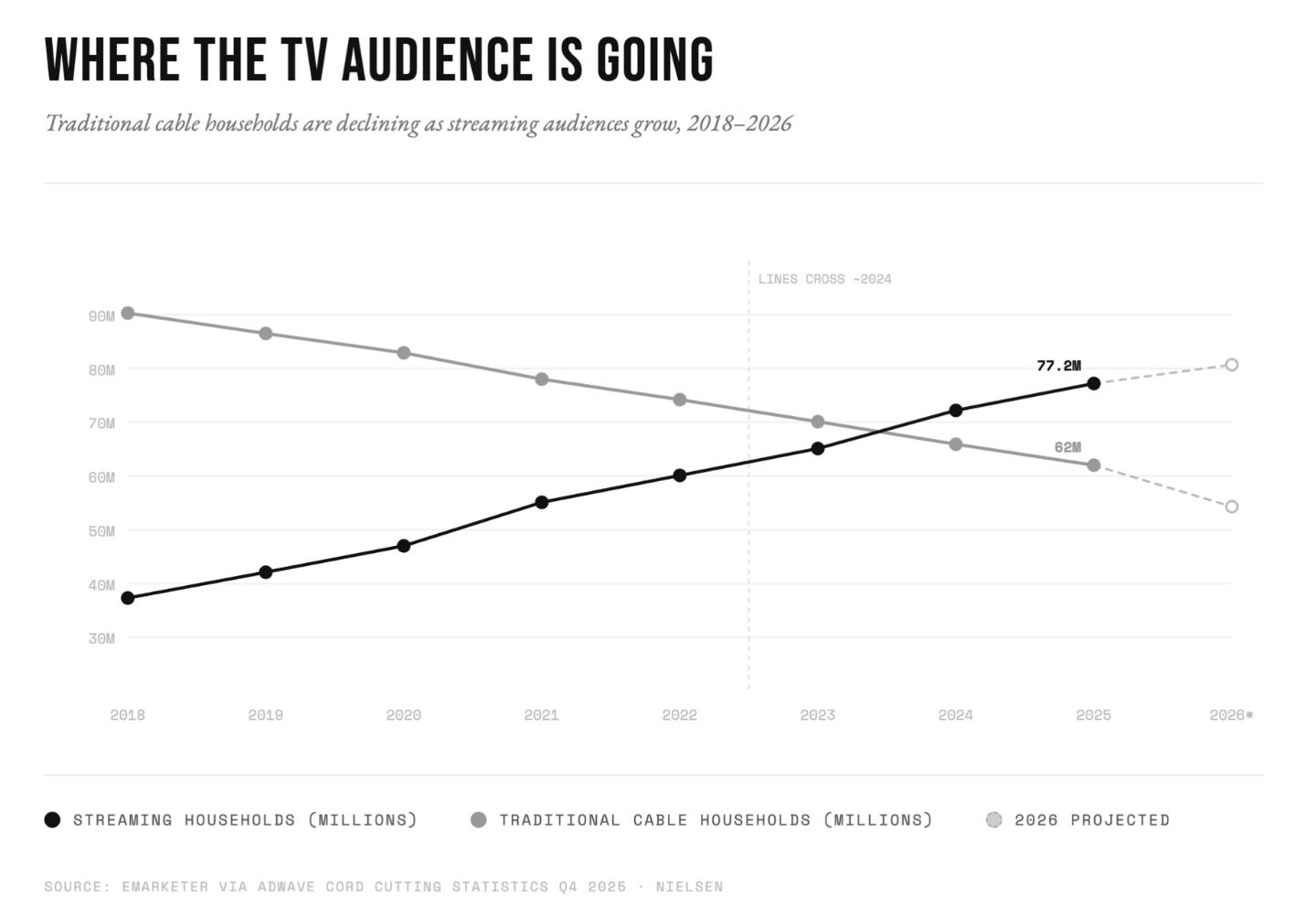
But the audience has been redistributing for years. Traditional cable households dropped from 90.3 million to 69 million between 2018 and today. As of late 2025, streaming accounts for nearly half of all U.S. TV viewership, more than cable and broadcast combined. The people a practice or firm spent years reaching on linear television are still out there. They are just watching somewhere else now, and traditional TV buys do not follow them there.

Programmatic advertising does.

The Basics

Programmatic is the automated buying and placing of digital ads across an open marketplace of publishers and platforms (connected TV, streaming services, display, native, video etc.). Rather than negotiating a fixed time slot on a specific channel, programmatic lets an advertiser define who they want to reach and deliver ads to that group wherever they happen to be across devices.

That targeting flexibility is what makes it genuinely different from linear TV. A plastic surgery practice, for example, can run ads specifically on programs that index heavily toward their patient demographic, rather than buying a broad daypart and hoping the right viewer is tuned in. The audience is defined first and the inventory follows.

Trackability is another meaningful difference. With traditional television, attribution was largely a matter of asking leads how they heard about the practice or firm. Programmatic tightens that loop through IP address matching and device ID tracking, connecting an ad impression → website visit → form fill

Google's brand lift studies, available through YouTube TV campaigns, go further, measuring actual increases in branded search volume over the course of a campaign. In some cases, that lift shows up within three months of launch.

Frequency and Retargeting

One of the most common mistakes when clients first enter programmatic is underinvesting in frequency. They dip a toe in, see no results, and write off the channel. The channel isn't the problem. The investment is. For clients who want to start more conservatively, retargeting is the right entry point.

Rather than spending against a cold audience, retargeting focuses exclusively on people who have already shown some level of interest. The cost is lower, the audience is tighter, and the brand stays present through the often long gap between when someone starts researching and when they actually reach out. A client running retargeting can stay in front of someone who browsed their site weeks ago and still hasn't made contact. That presence tends to be what tips the decision.

Where It Fits in a Broader Strategy

Programmatic is not a replacement for existing marketing. Paid search, SEO, social, television, out-of-home – all of it still matters. What tends to happen when paid advertising investment increases meaningfully is that organic traffic and branded search volume move with it. The channels are not competing but rather build on each other.

What programmatic specifically adds is presence before someone knows they need a service. When someone who has been served streaming ads for months finally decides to look up a business by name, that recognition was built gradually, across many impressions. They probably could not explain exactly why they chose that name. That accumulated familiarity is the goal.

There is also a connection to search visibility worth noting. AI is increasingly factoring brand mentions – the volume and quality of conversation about a brand across the web – into how it surfaces recommendations. Advertising that amplifies a brand generates the downstream activity: website visits, leads, reviews, and online conversation. That activity contributes indirectly to how a practice or firm appears in AI-driven results. 

An Exciting Capability at Studio 3

The programmatic practice at Studio 3 is still early, but it has moved quickly. The infrastructure is in place: vendor relationships, platform access, and a clear framework for how programmatic integrates with the broader campaigns already running for clients. The conversations are happening with practices and firms across the verticals Studio 3 serves, and the interest is consistent.

oOo

Michael Eiden, VP of Digital Ads
S3 media S3 media S3 media

Contact S3 When you're ready for what's next

It Begins With a Conversation. Then an Analysis. Then S3 Solutions.

This field is required.
Send Message

This site is protected by reCAPTCHA and the Google Privacy Policy and Terms of Service apply.

Share this content

Choose your channel and share this page across social, email, or text.

Share a link

Share to

Accessibility: If you are vision-impaired or have some other impairment covered by the Americans with Disabilities Act or a similar law, and you wish to discuss potential accommodations related to using this website, please contact our Accessibility Manager at (888) 351-3514.